For automotive dealers and vehicle importers, sourcing SUVs from China can open up additional purchasing opportunities. However, selecting the right vehicle involves more than comparing supplier quotations. Buyers must also consider vehicle specifications, export documentation, destination-country regulations, shipping expenses, and after-sales arrangements.
The Jetour T2 is one model worth evaluating for businesses looking to expand their SUV offerings. Known as the Jetour Traveller in China, it shares its model family with the international Jetour T2 sold in markets such as the UAE and other GCC countries.
For businesses planning to import a Jetour T2 from China, the key is to verify what is actually being supplied and calculate the full cost of bringing the vehicle to its destination.
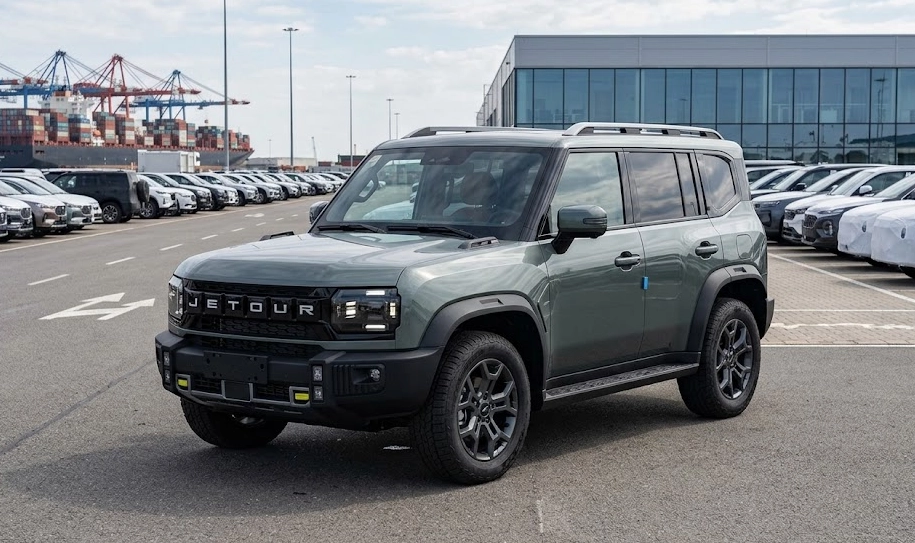
1. Start with the Exact Jetour T2 Configuration
Not every Jetour T2 or China-market Traveller has the same specifications. Engine options, transmissions, drivetrain configurations, and equipment can vary according to model year and trim.
Chinese-market Traveller models have included 1.5T and 2.0T gasoline variants, while the GCC-market Jetour T2 is available with a 2.0T turbocharged gasoline engine. Certain versions offer torque of up to 390 Nm. The exact output and transmission should always be confirmed against the selected vehicle's specifications.
Before placing an order, importers should establish the following details:
Model year and production date
Engine displacement and power output
Transmission type, such as 7DCT or 8AT where available
Two-wheel-drive or four-wheel-drive configuration
Interior equipment, safety features, and infotainment functions
Exterior color and optional equipment
These checks are especially important for bulk purchases. Even when two vehicles share the same model name and exterior design, their configurations may not be identical.
2. Check Whether the Vehicle Suits Your Target Market
A vehicle that sells well in one country may require additional checks before it can be imported and registered elsewhere. For dealers serving the Middle East, market suitability should be assessed before confirming the purchase.
Infotainment and connectivity
China-market vehicles may use software and connected services intended for domestic users. Importers should verify English or Arabic language support, navigation availability, Apple CarPlay or Android Auto compatibility, and access to regional services.
Where these functions are important to customers, request a demonstration of the actual vehicle rather than relying on a generic product brochure.
Equipment for hot climates
For buyers in the UAE, Saudi Arabia, Kuwait, and neighboring markets, air-conditioning performance, cooling-system specifications, tire suitability, and maintenance access are practical considerations.
The vehicle's equipment should be checked individually. A GCC-market label does not, by itself, prove that every component differs from the China-market version or that a particular feature is included.
Safety and driver-assistance systems
Features such as adaptive cruise control, automatic emergency braking, lane-keeping assistance, blind-spot monitoring, and parking cameras may vary between trims.
Dealers should confirm which systems are installed on the specific vehicle and whether they function as expected in the destination market.
3. Verify Import Eligibility Before Shipping
One of the most costly mistakes in vehicle sourcing is arranging shipment before confirming that the vehicle meets the destination country's import and registration requirements.
For UAE-bound vehicles, buyers should verify applicable conformity requirements, customs documentation, and registration eligibility with the relevant authorities.
For Saudi Arabia, importers should check the applicable Saudi Standards, Metrology and Quality Organization (SASO) requirements and the relevant vehicle import procedures.
The requirements can depend on the vehicle's age, origin, specifications, importer status, and other conditions. A vehicle available for export from China is not automatically eligible for registration in every destination market.
Before paying the balance or booking shipping, confirm which documents are required, who will provide them, and whether any inspections or certifications must be completed.
4. Calculate the Total Landed Cost of a Jetour T2
A competitive purchase price does not necessarily mean a lower final cost. Dealers should compare the total expense of importing a China-spec Jetour T2 with the cost of buying a locally supplied vehicle.
A useful cost checklist includes:
| Cost category | Key points to confirm |
|---|---|
| Vehicle price | Model year, trim, drivetrain, and optional equipment |
| Inland transport | Delivery from the supplier to the export port, where applicable |
| International shipping | Freight charges and shipping method |
| Insurance | Coverage during transportation, if required |
| Import duties and taxes | Charges applicable in the destination country |
| Customs clearance | Documentation and handling fees |
| Compliance | Applicable inspections, certificates, or modifications |
| After-sales support | Parts availability, service access, and warranty arrangements |
Quotation terms also matter. An FOB quotation and a CIF quotation do not cover the same costs. FOB generally covers delivery on board the vessel at the named shipment port, while CIF includes cost, insurance, and freight to the named destination port under the agreed terms. Destination duties, taxes, customs clearance, and registration expenses may remain separate.
For this reason, compare quotations on a consistent basis and calculate the expected landed cost per vehicle before making a purchasing decision.
5. Understand Warranty and After-Sales Limitations
Warranty coverage can influence both customer satisfaction and the resale value of an imported SUV.
Vehicles purchased through local GCC distributors may be covered by regional warranty arrangements subject to specific terms. However, buyers should not assume that an independently imported China-spec Jetour T2 automatically receives the same coverage.
Before ordering, ask the supplier to clarify the warranty status and obtain written confirmation where available. Also investigate the availability of replacement parts, routine maintenance components, and technical assistance in the destination country.
For dealerships, these arrangements are part of the overall sourcing decision rather than issues to address only after the vehicles arrive.
6. Choose a Supplier That Can Support the Export Process
A suitable vehicle export partner should help buyers clarify product specifications, confirm availability, coordinate export documentation, and arrange shipping according to the agreed terms.
When evaluating suppliers, consider how clearly they answer technical questions, whether the quoted configuration matches the requested vehicle, and whether pricing and delivery terms are documented.
For larger orders, confirming the specifications and paperwork for an initial vehicle before proceeding with a wider purchase may help reduce the risk of inconsistencies.
Businesses should also ensure that all key commercial terms—including payment schedules, shipment arrangements, documentation responsibilities, and any agreed inspection procedures—are clearly stated before finalizing the order.
Source Jetour T2 SUVs from China with Moluoni Group
Nanchun International, part of Moluoni Group, supports overseas buyers sourcing vehicles from China, including automotive dealers, importers, and distributors serving Africa and the Middle East.
Its vehicle export services include sourcing assistance, specification confirmation, export documentation, and international shipping coordination.
For buyers considering a Jetour T2 2.0T 4WD SUV for export, product details are available here:
View Jetour T2 2.0T 4WD SUV for Export
To request a quotation, provide your target model year, preferred configuration, order quantity, and destination port. This information helps the export team assess availability and prepare pricing based on the actual purchasing requirements.
Conclusion
Importing a Jetour T2 from China can provide additional sourcing options for automotive dealers, but a successful purchase depends on more than the initial vehicle price.
Confirming the engine and transmission, checking market suitability, verifying import eligibility, calculating total landed costs, and understanding warranty limitations can help buyers make more informed decisions.
For businesses planning to source the China-market Jetour Traveller or an export-configured Jetour T2, a structured procurement process is the best starting point. Accurate specifications and clear documentation help reduce avoidable risks and support a smoother vehicle export transaction.
https://www.moluoni.com/blog/jetour-t2-china-vs-gcc-specs-key-differences.html