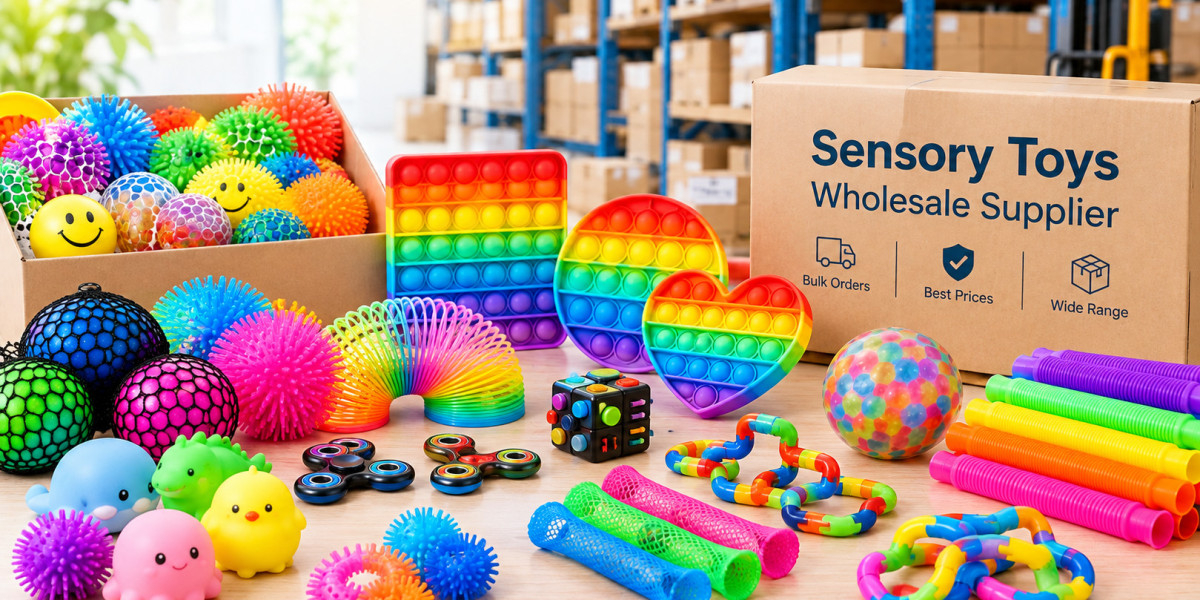

Sensory toys have moved from niche therapy tools to mainstream must-haves. Nurseries, schools, occupational therapists, charities, and independent toy shops across the UK are all searching for ways to stock high-quality sensory products without paying retail prices. That's where a trustworthy sensory toys wholesale supplier comes in.
But not every supplier delivers on their promises. Some cut corners on safety testing, others ship late, and many simply don't understand what sensory play actually requires. If you're a retailer, therapist, school buyer, or entrepreneur trying to source stock in bulk, this guide will walk you through exactly how to find a supplier you can rely on — and why so many UK buyers are now turning to Bulk Wholesale for their sensory toy needs.
Why Sourcing the Right Supplier Matters So Much
Sensory toys aren't ordinary products. They're used by children with autism, ADHD, sensory processing disorder, and anxiety, as well as by mainstream classrooms and early years settings that want calming, engaging tools on hand. A poor-quality fidget toy that breaks after a week, or a chewable item made from unsafe plastic, isn't just a wasted purchase — it can be genuinely harmful.
This is exactly why choosing the right sensory toys wholesale partner matters more than it might for other product categories. You're not just buying stock; you're buying trust from parents, teachers, and carers who expect these items to be safe, durable, and genuinely effective.
Step 1: Check Safety Certifications First
Before you even look at pricing or minimum order quantities, confirm that the supplier's products meet UK and EU safety standards. Look for:
CE and UKCA marking – legally required for toys sold in the UK
EN71 compliance – the European toy safety standard covering mechanical, physical, and chemical properties
Phthalate-free and BPA-free materials, especially for chewable or mouthable sensory items
A genuine wholesale sensory toys supplier will happily provide certification documents on request. If a supplier is vague, slow to respond, or unable to produce paperwork, treat that as a red flag and move on.
Step 2: Look at Product Range and Specialisation
Sensory toys cover an enormous range of categories — fidget spinners and cubes, weighted blankets, chewable jewellery, liquid motion bubblers, tactile balls, light-up toys, noise-cancelling headphones, and calm-down kits, to name just a few. A supplier that genuinely understands sensory play will stock a broad, well-curated range rather than a handful of generic fidget gadgets rebranded from a single factory.
This is one area where Bulk Wholesale stands out. As a dedicated sensory toys wholesale supplier, the company has built its catalogue specifically around sensory needs, rather than treating sensory toys as an afterthought alongside generic novelty items. That specialisation tends to translate into better product knowledge, more consistent quality, and staff who can actually answer detailed questions about materials, textures, and appropriate age ranges.
Step 3: Compare Minimum Order Quantities (MOQs) and Pricing Tiers
Every wholesale business has different MOQs. Some suppliers demand pallet-sized orders, which works for large retailers but excludes smaller nurseries, independent shops, and startups. Others offer tiered pricing that rewards bulk buying without locking smaller buyers out entirely.
When evaluating a sensory toys wholesale supplier, ask:
What's the minimum spend or unit count per order?
Are there discounts for repeat or subscription orders?
Can you mix and match products within a single order, or must you buy in fixed cartons?
Are sample packs available before committing to a full order?
Flexible ordering is often a sign of a supplier that understands its customer base includes everyone from large education authorities to single-location toy shops.
Step 4: Assess Delivery Reliability and UK-Based Stock
One of the most common complaints from UK toy retailers is long shipping delays caused by overseas suppliers shipping stock only after an order is placed. If your supplier doesn't hold UK-based inventory, you could be waiting weeks — which is a serious problem if you're trying to restock ahead of a busy season or fulfil a school contract on a deadline.
Ask potential suppliers directly:
Is stock held in a UK warehouse?
What's the average dispatch time?
Do they offer tracked delivery and clear communication on delays?
A reliable sensory toys wholesale supplier operating from within the UK, like Bulk Wholesale, generally offers faster turnaround, easier returns, and none of the customs complications that come with importing directly from overseas manufacturers.
Step 5: Read Reviews and Ask for Trade References
Don't rely solely on a supplier's own website copy. Search independent reviews, trade forums, and social media groups for early years professionals or toy retailers. Genuine feedback from other buyers tells you far more about reliability than polished marketing ever will.
It's also entirely reasonable to ask a supplier for references from existing trade customers, particularly if you're planning a large first order. A confident, established wholesale sensory toys business won't hesitate to connect you with satisfied clients.
Step 6: Evaluate Customer Support and Account Management
Wholesale relationships work best when they're ongoing rather than one-off transactions. Look for suppliers who offer:
A dedicated account manager or responsive customer service team
Clear invoicing and account history
Support with product information for your own marketing (descriptions, images, usage guidance)
Willingness to discuss custom or bespoke orders for schools and therapy providers
This kind of support becomes especially valuable when you're stocking for a specific audience, such as SEN (Special Educational Needs) schools, where product accuracy and appropriate recommendations genuinely matter.
Step 7: Consider Ethical and Environmental Standards
More UK buyers, particularly schools and public sector organisations, are factoring sustainability into procurement decisions. Ask potential suppliers about:
Recyclable or reduced plastic packaging
Ethical manufacturing practices and factory audits
Any environmental certifications held
Suppliers who can speak confidently about their supply chain — rather than deflecting the question — are generally the ones worth building a long-term relationship with.
Why Bulk Wholesale Has Become a Trusted Name in the UK
Among the growing number of options in this space, Bulk Wholesale has established itself as a dependable sensory toys wholesale supplier for UK businesses. Buyers consistently point to a few reasons for choosing them:
A genuinely specialised, well-organised sensory product range rather than a generic toy catalogue
Transparent safety certification for every product line
Flexible order quantities suited to both small independent shops and larger institutional buyers
UK-based stock and dependable dispatch times
Responsive support for trade customers, including help with reordering and product queries
For buyers who want a straightforward, low-risk way to stock sensory products without gambling on an unverified overseas supplier, Bulk Wholesale offers a dependable starting point.
Common Mistakes to Avoid When Choosing a Sensory Toys Supplier
Chasing the lowest price without checking quality. Cheap stock that breaks quickly damages your reputation more than it saves you money.
Ignoring certification paperwork. Never assume compliance — always ask for proof.
Overlooking product testing. Where possible, order samples before committing to a bulk purchase.
Working with suppliers who can't explain their materials. If they can't tell you what a product is made from, that's a problem.
Failing to plan for seasonal demand. Sensory toys often see spikes around back-to-school periods and awareness campaigns like World Autism Awareness Week — order ahead.
Frequently Asked Questions
What is a sensory toys wholesale supplier?
A sensory toys wholesale supplier sells sensory products — such as fidget toys, weighted items, tactile tools, and calming aids — in bulk quantities at discounted rates, typically to retailers, schools, therapists, and other trade buyers rather than individual consumers.
How do I know if a sensory toy supplier is reliable?
Check for valid UK/EU safety certifications (CE, UKCA, EN71), read independent trade reviews, confirm UK-based stock holding, and ask for references from existing customers before placing a large order.
Is it cheaper to buy sensory toys wholesale?
Yes. Buying sensory toys wholesale typically reduces the per-unit cost significantly compared with retail pricing, especially when ordering in larger quantities or on a repeat basis.
What should schools look for when buying sensory toys in bulk?
Schools should prioritise safety certification, durability, age-appropriateness, and suppliers experienced in working with SEN and early years settings, since these buyers often need specific product recommendations.
Does Bulk Wholesale supply sensory toys across the whole UK?
Yes, Bulk Wholesale supplies trade customers throughout the UK, offering a dedicated wholesale sensory toys range with UK-based stock and support for both small and large orders.
Final Thoughts
Finding a dependable sensory toys wholesale supplier takes a bit of research, but it pays off in fewer returns, safer products, happier customers, and a supply chain you can actually count on. Prioritise safety certification, product specialisation, delivery reliability, and genuine customer support over price alone.
For UK buyers looking for a supplier that ticks all of these boxes, Bulk Wholesale offers a well-established, trade-focused option worth adding to your shortlist.