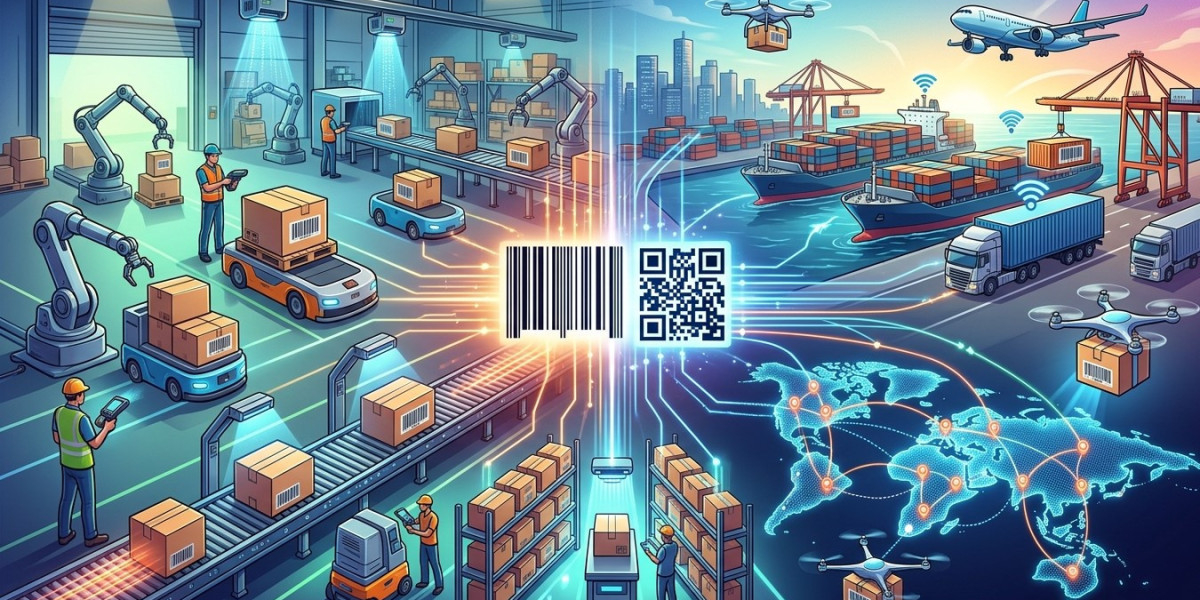

Modern supply chains depend on speed, accuracy, visibility, and efficient coordination between suppliers, manufacturers, warehouses, distributors, retailers, and customers. As businesses handle larger product volumes and increasingly complex logistics networks, tracking goods manually becomes difficult and time-consuming. Pointus Solutions provides barcode and Auto-ID technologies that help businesses improve product identification, inventory accuracy, warehouse operations, and supply chain visibility. Companies looking to Shop Barcode equipment can also explore a range of Printing Products designed to support labeling, tracking, and data collection requirements.
Barcode technology has become one of the most practical tools for connecting physical products with digital information. By assigning machine-readable codes to products, cartons, pallets, assets, and locations, businesses can capture information quickly as goods move through different stages of the supply chain.
From procurement and receiving to storage, order fulfillment, transportation, and delivery, barcode technology can help businesses create a more organized and transparent supply chain.
What Is Barcode Technology in Supply Chain Management?
Barcode technology uses machine-readable symbols to identify products or other physical items. A barcode scanner reads the symbol and sends the encoded information to a connected software system.
In supply chain management, barcodes can be applied to:
- Raw materials
- Components
- Finished products
- Cartons
- Pallets
- Containers
- Storage locations
- Shipments
- Assets
When a barcode is scanned, information can be recorded in an inventory management system, Warehouse Management System (WMS), Enterprise Resource Planning (ERP) platform, POS system, or another business application.
This creates a link between physical inventory and digital records.
Why Supply Chain Visibility Matters
Supply chains involve multiple stages and participants. A product may travel from a supplier to a manufacturer, then to a distribution center, warehouse, retailer, and finally the customer.
Without accurate tracking, businesses may struggle to answer basic questions such as:
- Where is the product?
- How many units are available?
- When was it received?
- Which warehouse contains the stock?
- Has the order been shipped?
- Which batch or serial number was dispatched?
Barcode technology helps answer these questions by recording product movements throughout the supply chain.
Better visibility can help businesses identify delays, manage inventory more effectively, and respond to customer requirements faster.
1. Improving Supplier and Receiving Operations
The supply chain begins with suppliers and incoming materials.
When goods arrive at a warehouse or manufacturing facility, employees can scan barcodes to identify products and compare them against purchase orders or expected shipments.
This can help businesses:
- Verify received products
- Confirm quantities
- Record receiving times
- Identify damaged or missing items
- Update inventory records
- Track batches and serial numbers
Barcode scanning reduces the need for employees to manually enter product information, which can improve receiving speed and accuracy.
2. Better Inventory Management
Inventory is one of the most important areas of supply chain management.
Businesses need enough inventory to satisfy demand without holding excessive stock. Inaccurate inventory records can make this balance difficult to achieve.
Barcode scanning allows inventory movements to be recorded whenever products are received, stored, moved, picked, or shipped.
This can provide businesses with better information about:
- Current stock levels
- Product locations
- Stock movement
- Fast-moving products
- Slow-moving products
- Inventory discrepancies
- Reorder requirements
Accurate inventory information supports better purchasing and replenishment decisions.
3. Streamlining Warehouse Operations
Warehouses are central points in many supply chains, and barcode technology can improve several warehouse activities.
Receiving
Incoming products can be scanned and verified against expected inventory.
Put-Away
Employees can scan both the product and storage location to confirm where the inventory has been placed.
Picking
Workers can scan products to verify that the correct items are being selected for an order.
Packing
Products can be scanned again to confirm order contents before packages are sealed.
Shipping
Shipment barcodes can be scanned to record outgoing inventory and shipping information.
By using scanning throughout these processes, warehouses can create a more consistent workflow.
4. Reducing Manual Data Entry
Manual data entry is a common source of supply chain errors.
Employees may accidentally enter an incorrect product code, quantity, or serial number. These errors can affect inventory records and create problems later.
Barcode scanning reduces the amount of information employees need to type manually.
Instead of entering a long SKU or serial number, an employee can scan the barcode and allow the system to retrieve the relevant information.
This can reduce:
- Typing errors
- Duplicate entries
- Incorrect product identification
- Data-entry time
- Administrative workload
More accurate data helps supply chain managers make better decisions.
5. Improving Order Fulfillment
Customers expect orders to be processed accurately and quickly. Barcode technology can improve order fulfillment by adding verification steps.
During picking, an employee can scan the product barcode and compare it with the order information.
If the wrong item is selected, the system can potentially identify the mismatch before the order reaches the customer.
Barcode scanning can therefore support:
- Accurate picking
- Faster packing
- Order verification
- Shipment confirmation
- Reduced returns
This is particularly important for e-commerce businesses handling large numbers of individual orders.
6. Supporting Product Traceability
Traceability is increasingly important for businesses that need to track products throughout the supply chain.
Barcodes can be used to identify:
- Product batches
- Lot numbers
- Serial numbers
- Manufacturing dates
- Expiration information
- Product versions
A product can be scanned at multiple points as it moves through the supply chain.
This creates a history of product movement that can help businesses investigate quality issues, manage recalls, or identify specific inventory groups.
7. Improving Transportation and Distribution
Barcode technology can also support logistics and transportation activities.
Cartons, pallets, and shipments can receive barcode labels that are scanned as they move through distribution centers and transportation processes.
Scanning can help businesses record when shipments are:
- Loaded
- Transferred
- Received
- Sorted
- Dispatched
- Delivered
This improves shipment visibility and helps logistics teams monitor the movement of goods.
8. Supporting Multi-Warehouse Operations
Large businesses may operate several warehouses or distribution centers. Managing inventory across multiple locations can be challenging without reliable identification and tracking.
Barcode systems allow businesses to identify products and locations consistently across facilities.
For example, inventory can be scanned when transferred from Warehouse A to Warehouse B. The system can update the inventory records and maintain information about where the products are located.
This helps businesses make better use of available inventory across their network.
9. Enhancing Retail Supply Chain Management
Retailers depend on accurate product information to maintain stock availability.
Barcode technology connects warehouses, distribution centers, and retail stores by providing a consistent product identification method.
Retail employees can scan products during:
- Receiving
- Shelf replenishment
- Inventory counting
- Stock transfers
- Checkout
- Returns
Sales information can also contribute to replenishment decisions. When product movement is captured accurately, retailers can better understand demand and identify items that require restocking.
10. Supporting Manufacturing Supply Chains
Manufacturers need to track raw materials, components, work-in-progress products, and finished goods.
Barcode technology can provide identification at different production stages.
For example:
Raw material → Production → Quality control → Finished product → Warehouse → Shipment
Each stage can involve barcode scanning to record movement and status.
This can improve production visibility and support traceability throughout the manufacturing process.
11. Improving Supply Chain Accuracy
Small errors can become significant when they move through multiple supply chain stages.
For example, an incorrect quantity recorded during receiving can result in inaccurate inventory information. That information may then affect purchasing, production, order fulfillment, and customer deliveries.
Barcode scanning creates standardized data capture across the supply chain.
When employees consistently scan products rather than manually entering information, businesses can reduce the number of opportunities for data-entry mistakes.
12. Enabling Faster Decision-Making
Supply chain managers need accurate information to make decisions.
Barcode technology can provide data about inventory movement, order processing, receiving activity, and product availability.
This information can support decisions related to:
- Reordering
- Stock transfers
- Warehouse allocation
- Production planning
- Inventory levels
- Shipping priorities
- Customer orders
Better data can help businesses respond more quickly to changing operational requirements.
Barcode Technology and Modern Supply Chain Software
Barcode scanning becomes more powerful when integrated with business software.
Common integrations include:
- Warehouse Management Systems
- Enterprise Resource Planning systems
- Inventory management software
- Point-of-Sale systems
- Order management systems
- Manufacturing software
- Transportation management systems
The scanner captures the information, while the software stores and processes it.
This integration allows businesses to create automated workflows rather than treating barcode scanning as an isolated activity.
Choosing the Right Barcode Equipment
Businesses should select barcode equipment based on their operational environment and scanning requirements.
Barcode Scanners
Handheld scanners are useful for general warehouse and retail applications, while wireless scanners provide additional mobility.
Mobile Computers
Mobile computers are useful for employees who need to scan products and access business applications while moving around warehouses or facilities.
Barcode Printers
Barcode printers produce labels for products, cartons, pallets, assets, and storage locations.
Barcode Labels
Labels should be selected according to the product surface, environment, required lifespan, and printing technology.
The right combination of hardware and software can make barcode-based supply chain processes more reliable.
Best Practices for Implementing Barcode Technology
Businesses should plan their barcode implementation carefully.
Standardize Product Identification
Use consistent product codes and barcode formats throughout the supply chain.
Label Products and Locations Clearly
Products, cartons, pallets, racks, and storage locations should have readable barcode labels.
Train Employees
Employees should understand proper scanning procedures and how to handle exceptions.
Integrate Systems
Connect barcode devices with inventory, WMS, ERP, or other relevant software.
Maintain Equipment
Regularly maintain barcode scanners and printers to reduce operational interruptions.
Monitor Data Accuracy
Businesses should regularly review inventory data and conduct audits to identify discrepancies.
The Future of Barcode Technology in Supply Chain Management
As supply chains become increasingly connected, barcode technology will continue to serve as an important data-capture tool.
Modern barcode systems can work with mobile devices, cloud software, analytics platforms, warehouse systems, and automated workflows. Businesses can combine barcode technology with other identification technologies when their applications require additional capabilities.
The goal is to create a supply chain where physical products can be identified and tracked accurately as they move through different processes.
Conclusion
Barcode technology plays a vital role in modern supply chain management by improving product identification, inventory accuracy, traceability, and operational visibility. From supplier receiving and warehouse management to manufacturing, transportation, retail, and order fulfillment, barcode scanning can connect physical inventory with digital business information.
By reducing manual data entry and improving the accuracy of product movements, barcode technology can help businesses operate faster and make better-informed decisions. When scanners, printers, labels, mobile computers, and supply chain software work together, organizations can build a more efficient and connected supply chain.
Pointus Solutions provides barcode and Auto-ID solutions designed to support businesses across warehouse, retail, manufacturing, logistics, and supply chain operations. Whether you want to Shop Barcode scanners and equipment or explore dependable Printing Products, choosing the right barcode solution can help improve visibility, accuracy, and efficiency throughout your supply chain.