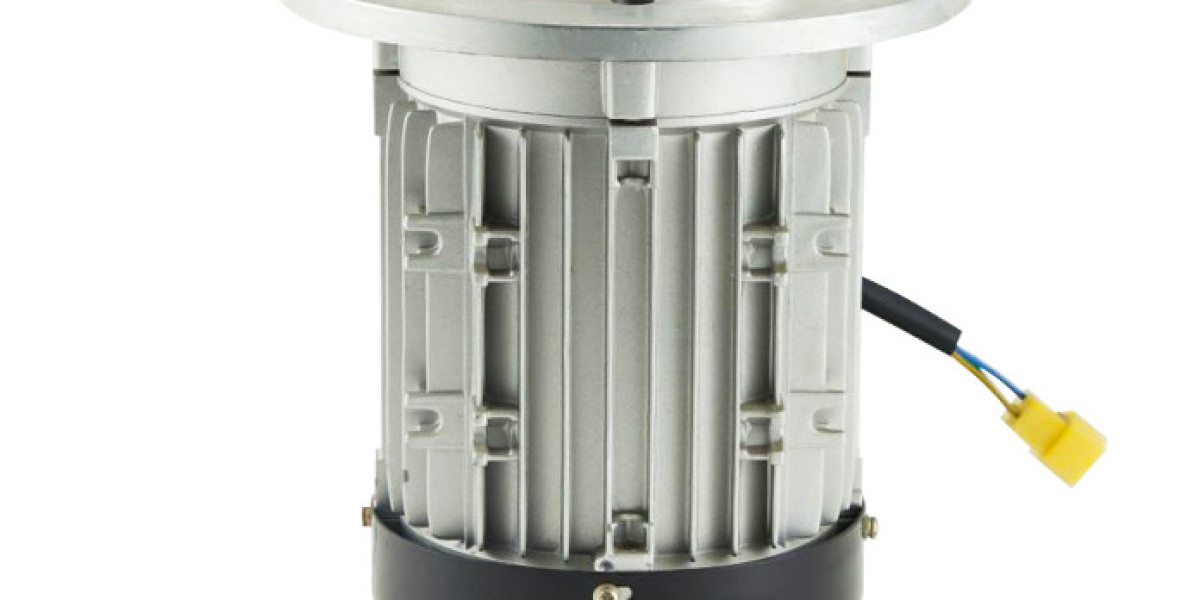

Industrial production depends on electric motors that provide consistent operation across different working environments. A Permanent Magnet Motor Factory supports this demand by manufacturing motors designed for industrial machinery, automation systems, transportation equipment, and many other applications. Through organized production management and engineering development, factories help customers obtain motor solutions suitable for changing manufacturing requirements.
The production cycle begins with project evaluation. Engineers review customer specifications, including rated power, operating voltage, rotational speed, mounting dimensions, environmental conditions, and expected service life. Technical discussions allow both parties to confirm important design details before manufacturing begins.
Product development involves electromagnetic design, mechanical structure optimization, thermal analysis, and material selection. Engineering teams create detailed drawings while evaluating production feasibility. Simulation software helps verify design concepts before production tooling is prepared.
Material quality directly influences finished motor performance. Permanent magnets require stable magnetic characteristics, while copper wire must provide reliable electrical conductivity. Silicon steel laminations contribute to magnetic efficiency, and bearings influence long-term operating stability. A Permanent Magnet Motor Factory carefully evaluates incoming materials before production starts.
Manufacturing consists of multiple coordinated operations. Stator cores are assembled, windings are installed, insulation materials are applied, rotors are prepared, and permanent magnets are positioned according to design specifications. Shaft machining, bearing installation, dynamic balancing, and housing assembly complete the mechanical structure before electrical testing begins.
Testing procedures are carried out during different production stages. Electrical measurements verify winding integrity, while mechanical inspections confirm assembly accuracy. Finished motors undergo load tests, vibration analysis, noise evaluation, rotational speed measurement, and insulation testing. These inspections provide valuable information before products leave the factory.
Industrial customers often request customized products. Motors may require special voltage ratings, unique shaft configurations, customized flanges, encoder compatibility, waterproof enclosures, or additional cooling methods. Flexible manufacturing systems allow factories to accommodate these requirements without interrupting standard production activities.
Permanent magnet motors support numerous industries, including automation equipment, industrial robots, textile machinery, conveyor systems, packaging equipment, agricultural machinery, water treatment systems, medical devices, and renewable energy equipment. Each application presents different operating conditions, encouraging manufacturers to develop diverse product series.
Continuous improvement is also reflected in factory management. Production equipment is updated periodically, employees receive technical training, and manufacturing processes are reviewed to improve efficiency and product consistency. Data collected during production helps identify opportunities for process refinement and quality enhancement.
International customers often value technical documentation alongside physical products. A Permanent Magnet Motor Factory may provide performance data, dimensional drawings, wiring information, inspection reports, and maintenance recommendations to support equipment integration and future servicing.
As industrial technology continues evolving, a Permanent Magnet Motor Factory remains committed to improving engineering capabilities, refining production methods, and delivering dependable motor solutions for a broad range of industrial applications.