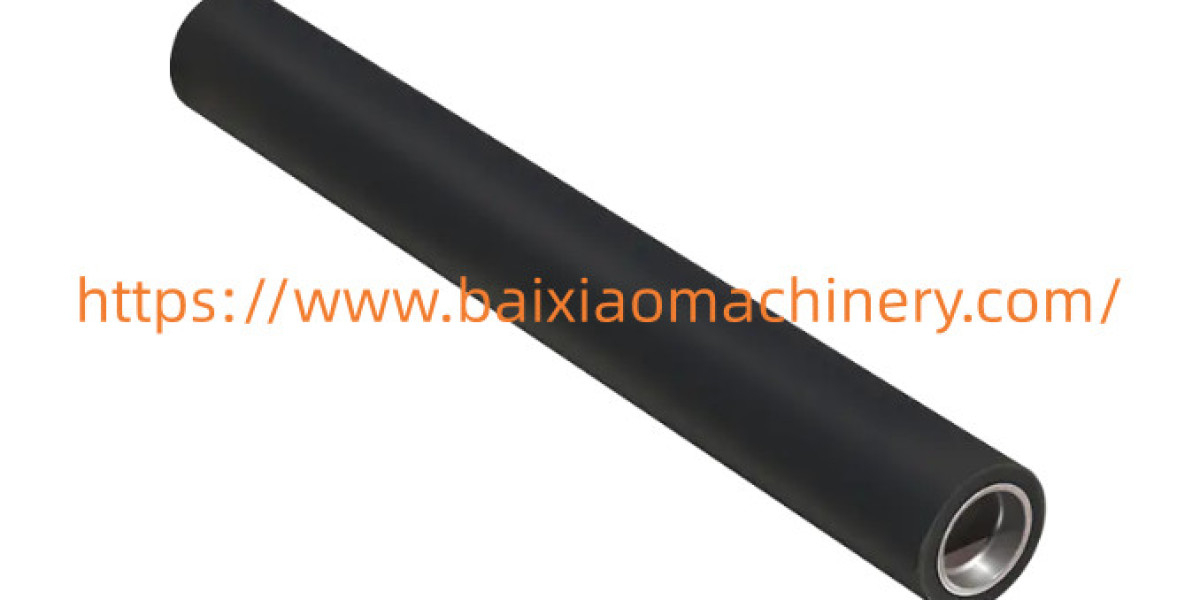

Rubber Roller selection plays an important role in many industrial production lines, including printing, packaging, textile processing, film coating, and material conveying systems. The performance of this component can influence production stability, surface quality, and operational efficiency. Because of its wide application range, choosing the right specification requires careful evaluation of several technical and environmental factors.
One of the first considerations is material compatibility. Different production processes involve different working environments, such as exposure to heat, chemicals, or friction. The surface material must be suitable for these conditions to maintain stable performance during continuous operation. Incorrect material selection may lead to premature wear or inconsistent processing results.
Hardness is another important parameter. The level of hardness affects contact pressure between the roller and processed materials. Softer surfaces may provide better cushioning, while harder surfaces may offer more controlled pressure. Selecting an appropriate balance helps maintain consistent material handling and reduces variation during production.
Surface treatment also plays a role in performance. Depending on application needs, different finishes may be used to improve grip, reduce slippage, or support smoother material movement. In printing and coating applications, surface consistency is especially important for maintaining stable output quality.
Temperature resistance should also be taken into account. Many industrial environments operate under elevated or fluctuating temperatures. Equipment must maintain its physical properties under these conditions to ensure continuous operation without deformation or performance decline.
Another factor is resistance to chemicals and solvents. In certain industries, materials may come into contact with cleaning agents, inks, adhesives, or coating substances. The selected component should maintain stability when exposed to these substances over time.
Baixiao works with customers across different industries that require practical roller solutions for various production systems. Each application has different requirements, including load capacity, operating speed, and environmental conditions. By focusing on engineering design and manufacturing processes, Baixiao supports users in selecting equipment suitable for their production needs.
Durability is also a key consideration. Industrial equipment is often expected to operate for long cycles with minimal interruption. A well-designed structure helps reduce maintenance frequency and supports stable performance over time. This contributes to improved operational planning and reduced downtime.
In addition, precision balancing and structural design influence operational smoothness. Even small inconsistencies can affect material movement and lead to production variation. Proper design helps maintain consistent rotation and stable contact during operation.
As manufacturing industries continue to develop, equipment selection has become more focused on efficiency and adaptability. Many production managers evaluate components not only based on initial performance but also on long-term usability and maintenance requirements.
Another important aspect is system compatibility. In modern production environments, multiple machines work together in a continuous workflow. Proper integration helps ensure smooth material transfer between different processing stages, reducing interruptions and improving coordination.
For more information about industrial roller solutions and product options, visit https://www.baixiaomachinery.com/ where Baixiao provides additional details on manufacturing capabilities and application support.